
7 August 2024
In today's interconnected global economy, businesses of all sizes engage in international transactions.
Whether it's a digital marketing agency in the U.S. that employs experts from around the world or a Chinese sleepwear brand that imports materials from Peru, companies rely on international payments to seamlessly transfer money between countries.
These transactions are the backbone of modern global commerce and span the spectrum from trade, wages, royalties and investments.
International business payments, also known as cross-border payments, are the transfer of money between businesses in different countries. They can include any trade, retail or individual financial transaction, such as purchasing goods or services, paying wages or royalties, or making investments.
Almost all international business payments involve more than one currency, so they need a foreign currency to mediate the transfer. For example, a company in Australia may make a payment using Australian dollars, while a recipient of funds from the UK must receive payment in pounds sterling.
International business payments ensure smooth transfer and conversion of funds so that companies in a globalizing world can conduct business in foreign financial markets without significant disruptions or delays.
Main ways of making international payments
An international wire transfer is a type of payment via electronic funds transfer (EFT) that allows you to send money directly from your company's bank account to another company's account overseas.
To make an international bank transfer, you need to tell your bank how much money you need to send and to whom. You will also need the SWIFT (Society for Worldwide Interbank Financial Telecommunication) bank number or BIC (bank identification code) of the recipient.
â— In most cases, international wire transfers can be processed the same day.
â— Bank transfers are a trusted, reliable and long-recognized method of payment.
â— Fees can be relatively high compared to other international payment methods.
â— Some wire transfers may take several days to process.
â— In some cases, transfers may be misdirected or even lost.
Because of high fees, international wire transfers are a better option for companies with larger one-time transactions than regular payments.
A payment gateway is a tool that allows businesses to accept a variety of electronic payments including credit cards, debit cards, digital wallets, cryptocurrencies, etc. Companies can integrate payment gateways into their website or e-commerce platform and these tools will securely authenticate, verify and process transactions from around the world.
A good payment gateway will include multi-currency support that can accept payments in different currencies, convert them and transfer the funds to your business account.
â— The pros of using payment gateways for business payments:
â— They can be easily integrated into your website or online store.
â— They are secure and often contain fraud detection tools.
â— They offer a seamless and convenient experience.
â— They accept a variety of payment methods including credit or debit cards, digital wallets, and wire transfers.
â— The design of payment gateways can often be customized to match your brand identity.
â— The cons of using payment gateways for business payments:
â— A fee is usually charged for each transaction.
â— Some payment gateways require merchants to be PCI compliant.
Due to their security, ease of use and support for different currencies and payment methods, payment gateways are one of the best ways for companies to send and receive money abroad. However, they may not be suitable for purposes such as payroll payments.
If you're looking for a reliable solution, consider Payver — it offers a high degree of security, plenty of options for integration, and support for a variety of payment methods.
What is a letter of credit
A letter of credit is a document sent by a bank or financial institution guaranteeing that you, the seller, will be paid on time and for the full amount. Letters of credit can guarantee both buyers and sellers that an international transaction will take place within a certain period of time for a certain amount of money.
The pros of using letters of credit for business payments:
â— They provide peace of mind for both buyers and sellers, especially for larger transactions.
â— The bank is financially responsible for the buyer.
The cons of using letters of credit for business payments:
â— They usually only involve one transaction, so you will need a new letter of credit for each payment.
â— They can be expensive and time consuming, requiring a lot of paperwork.
Letters of credit can be particularly useful for certain business activities, such as importing or exporting, as they allow companies to enter into large transactions without the certainty that payment will be received at a certain point.
Cryptocurrency
Unlike traditional fiat currencies such as GBP or USD, cryptocurrencies are virtual currencies based on blockchain technology. They are an interesting option for international business payments because their currencies are universal (e.g. bitcoin or etherium). This eliminates the need for foreign currency and saves money on currency conversion.
Because of their decentralized nature, cryptocurrencies also don't need intermediaries such as banks, further reducing transaction fees and speeding up the process of sending and receiving money overseas.
The pros of using cryptocurrencies for business payments:
â— They are cheaper than traditional payments because they exclude bank fees and currency conversion fees.
â— Payment is instantaneous.
The cons of using cryptocurrencies for business payments:
â— They are still relatively new and less reliable than other international payment methods.
â— There is a risk of exchange rate fluctuations.
â— Some vendors and customers may be reluctant to accept cryptocurrency as a payment method.
Cryptocurrency can be a good option for companies that want to save money on international money transfers and need a faster way to make international business payments.
How to choose the right method of international business payment
Now that you know what payment methods exist, it's time to choose the right one for your business. We recommend that you consider the following factors:
â— The amount of each payment: some payment methods are better suited for large one-time transfers (e.g., international wire transfer or letter of credit), while others are more suitable for recurring payments (e.g., payment gateway).
â— Payment frequency: similarly, some payment methods are better suited for one-time transfers and others for regular transfers.
â— The speed of each payment: do you need to receive and send money abroad instantly? If yes, you should consider a payment gateway or cryptocurrency.
â— Transaction fees: how much are you willing to pay for international money transfers? If you want to minimize fees, look at a cryptocurrency or payment gateway.
â— Security: all of the payment methods we have described are secure, but some are more secure than others, such as international wire transfer or letter of credit.
Payver tools to help you make international business payments
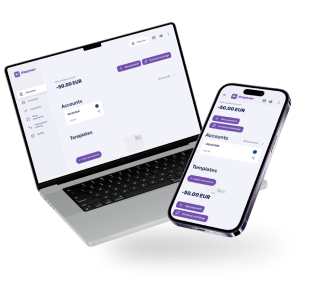
Payver is a reliable international payment service that helps you make international money transfers. Thanks to our advanced payment technologies, you can send and receive money abroad reliably and efficiently.
Features that make Payver ideal for international business payments:
â— Multi-currency support: we support a wide range of currencies, making it easy to make payments anywhere in the world.
â— Intelligent transaction routing: our intelligent routing helps you avoid high conversion fees and make payments faster.
â— Security tools: we use the latest security and fraud detection tools to protect your money.
â— User experience: our payment technologies provide a convenient and seamless experience for you and your customers.
If you would like to learn more about how we can help your business with international business payments, contact us today to learn more about our services and features
Powered by

even the most complex payments
